One Dead Outlet, No Tripped Breaker — and a Fire Hazard Hiding Behind the Drywall
A homeowner here in Prince George called me about something small and weirdly annoying: one outlet in a finished basement bedroom just didn't work. No tripped breaker. The outlet right beside it worked fine. Nothing to reset, nothing obviously wrong.
Little problems like this get shrugged off all the time — you plug the lamp in somewhere else and move on. This one turned out to be hiding a real fire hazard.
What was actually going on
The panel was sending full power toward that outlet, but the power never arrived. That means the wire was broken somewhere inside the wall.
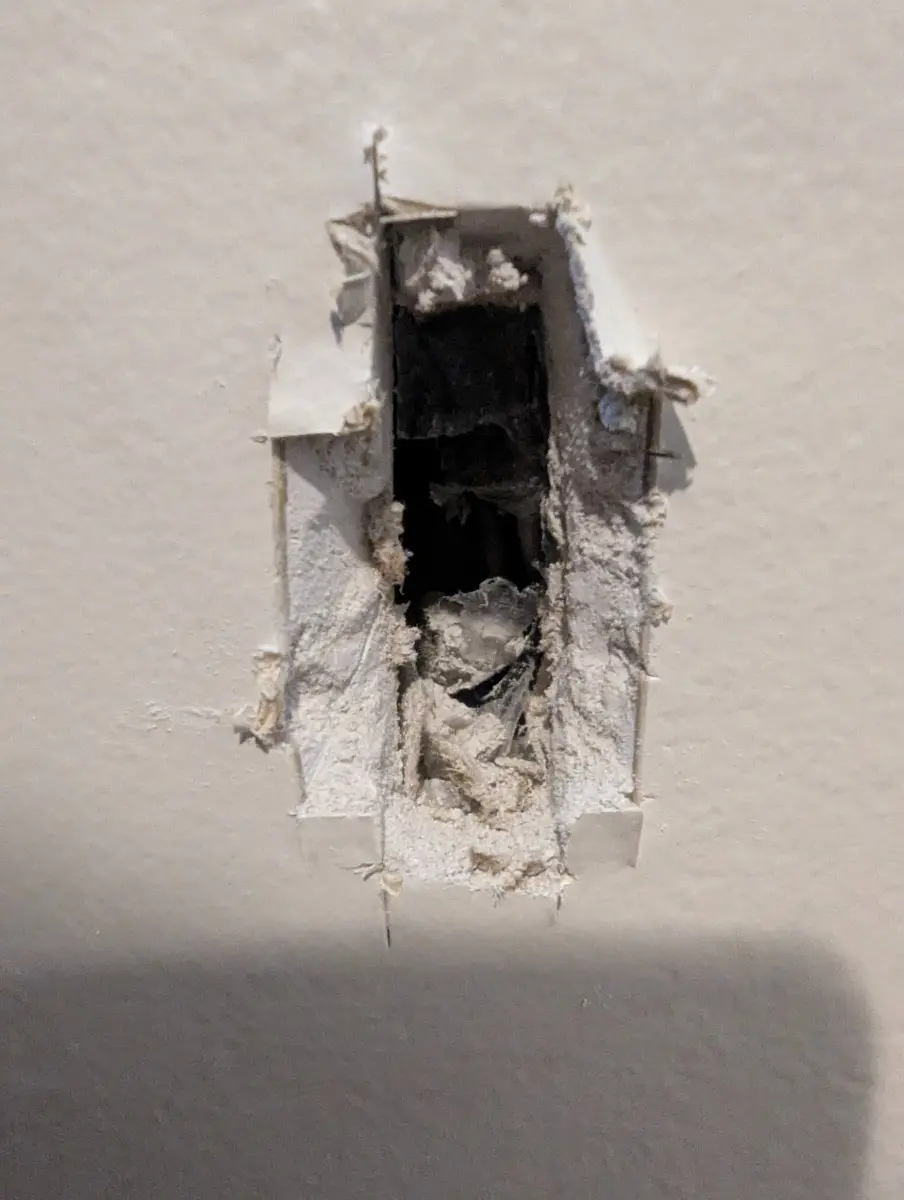
Instead of cutting holes to hunt for it, I used a tool called a circuit tracer — it sends a signal down the dead wire, and a handheld wand follows that signal right through the drywall. I walked the wall until the signal suddenly stopped, and right at that spot there was a barely-visible bulge under the paint.
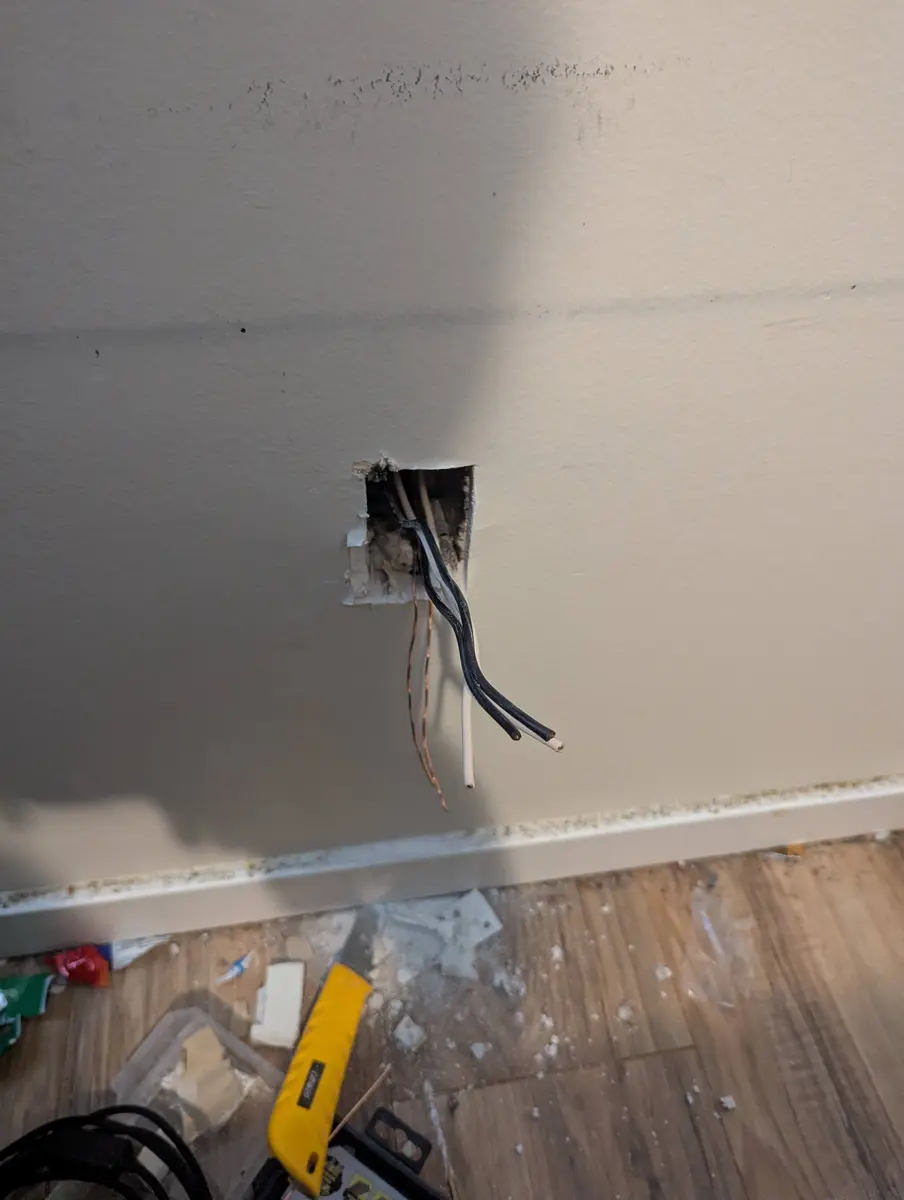
Behind it: a live electrical box that the drywallers had accidentally sealed inside the wall during the basement renovation. The electrician who finished the reno never caught it. Live wires had been sitting inside a closed wall — no cover, no outlet, no protection — since the day the room was painted.
Why this matters for your house
Buried live wiring is exactly how house fires start slowly: an unfinished connection sealed away where nobody can see or smell trouble. And it's more common than you'd think, because renovations move fast and mistakes get covered by the next trade coming in behind.
The fix was one small, precise cut — the tracer found the box within an inch — plus a proper connection and the missing outlet installed. Total drywall damage: one patch the size of an outlet cover.
The takeaway
If an outlet dies with no tripped breaker, or a switch has "never worked since the reno," don't just live with it. It's usually a cheap, quick diagnosis — and every once in a while, it's the visit that catches something dangerous before it becomes a very bad day.
The complete case study — test readings, code references, and exactly how this was diagnosed — is on the MDN Electric site.
Read the full case study Book an electricianQuick answers
Why would an outlet be dead if the breaker isn't tripped?
It usually means the wiring path between the panel and that outlet is physically broken — a failed connection in a junction box, a damaged cable, or (as in this case) a live box accidentally sealed behind drywall during a renovation.
Can an electrician find a broken wire without cutting open the wall?
Yes. A circuit tracer injects a signal onto the dead wire and a receiver follows it through the drywall. It locates the break within inches, so the repair is one small cut instead of exploratory holes.
Is a dead outlet dangerous or just annoying?
Usually just annoying — but the cause can be dangerous. A failed or buried connection can mean live, unprotected wires inside the wall, which is a fire hazard. It's worth a proper diagnosis rather than ignoring it.
More home electrical guides
- Our Hot Tub Breaker Kept Tripping — and the Problem Was the Breaker
- The $100 Part That Beat the $60 Fan: Repair Math Your Contractor Should Show You
- Your Breaker Keeps Tripping? Here's What It Was Warning Us About
- The Baseboard Heater Myth: Why 'More Efficient' New Heaters Won't Cut Your Hydro Bill
- We Turned Off the Breaker — and the Lights Stayed On