Your Breaker Keeps Tripping? Here's What It Was Warning Us About
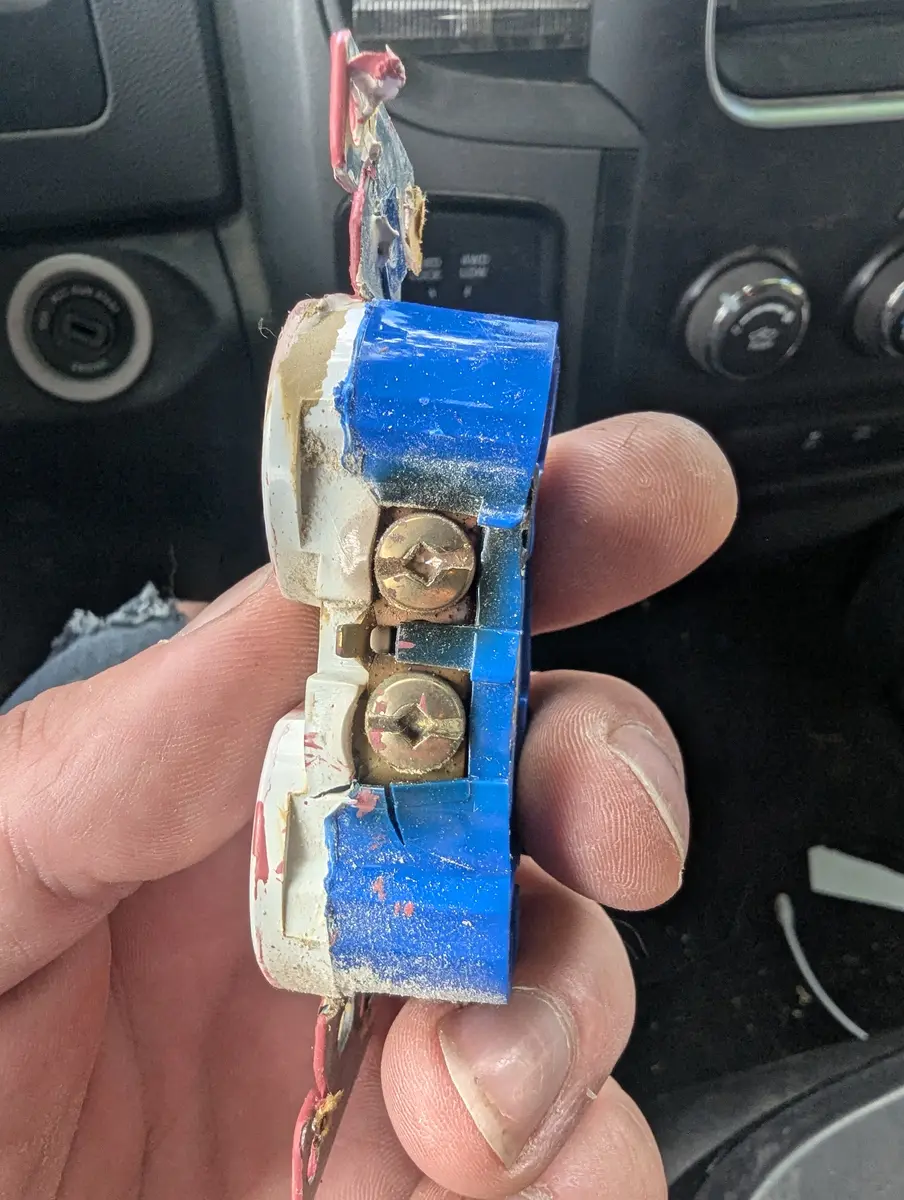
A family here in Prince George had a breaker that tripped all the time. Making toast while the microwave ran? Trip. It was annoying, but the fix was always just a walk to the panel — until the day the dining room and bedroom went completely dead and no breaker was tripped.
What I found in the wall
I traced the dead circuit to an outlet in the living room and pulled it out. The back of it had melted. The metal contacts inside were burned away entirely. That's what killed the power to the other rooms — and it's also about as close to a house fire as you want to get.
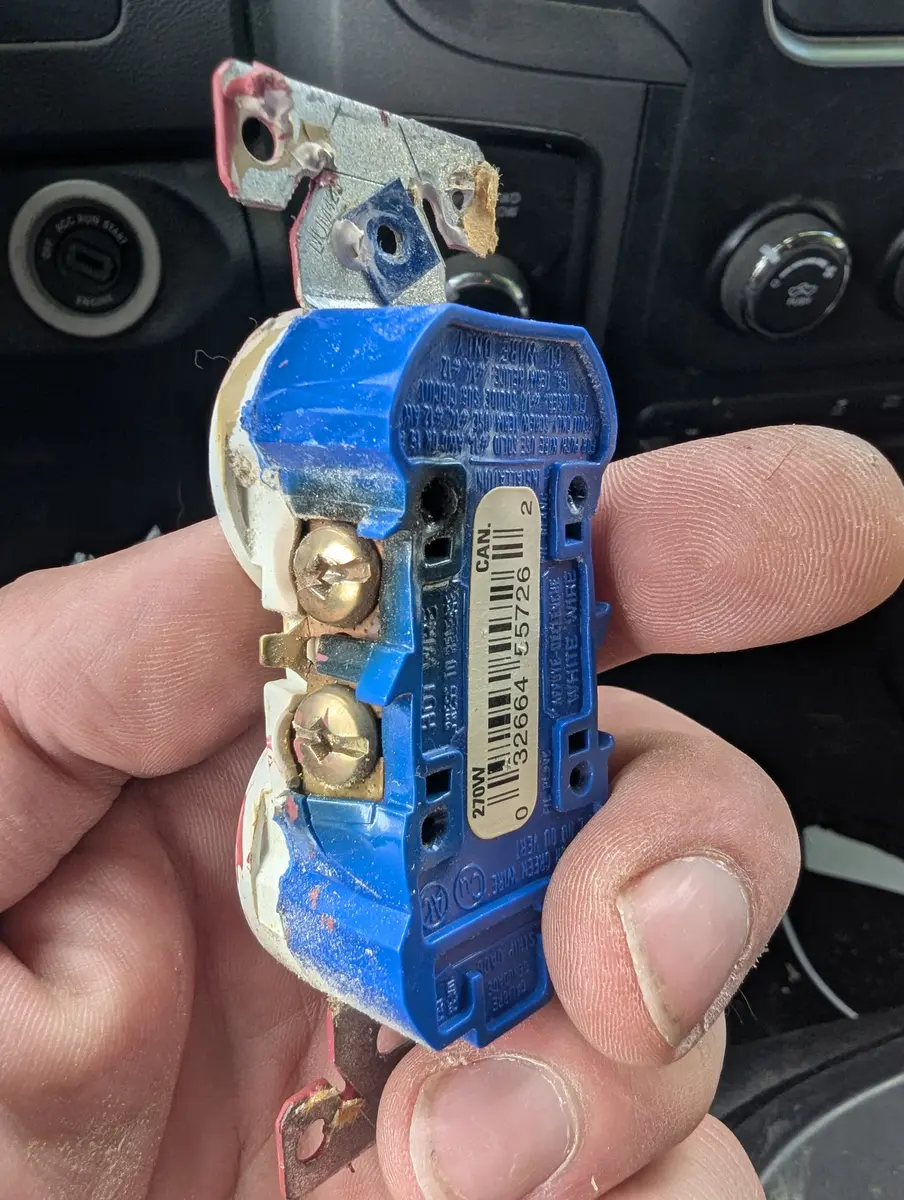
Why it happened
Two things, and if your home was built before the 90s, both might apply to you:
- Too much on one circuit. The living room, dining room, and bedroom were all sharing a single circuit — with a TV, a portable air conditioner, a microwave, a fan, and chargers on it. All those months of breaker trips were the electrical system warning the family it was overloaded.
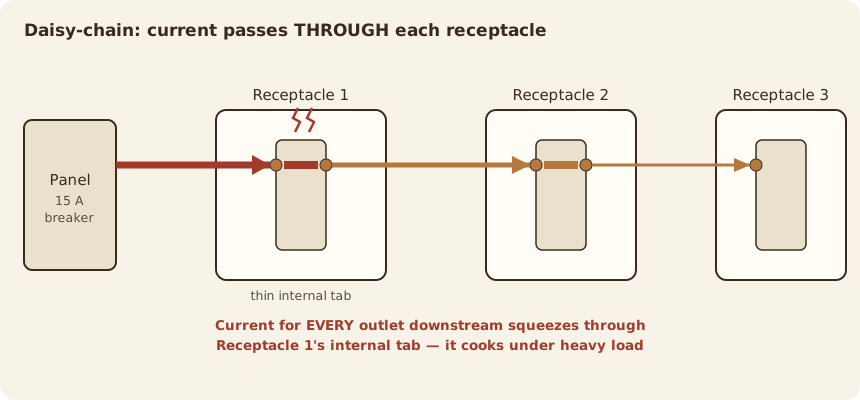
- Old-style wiring shortcuts. In many older homes, power for the next room literally flows through the guts of each outlet on the way there. Under heavy load, those thin internal parts cook. Eventually one melts — and everything past it goes dark.
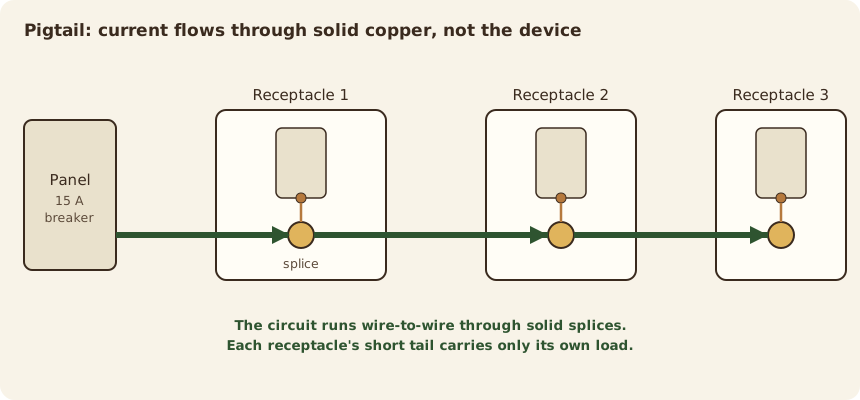
Here's the difference between the old way and the right way:
The fix
I replaced the melted outlet and rewired it so the power flows through solid connected copper instead of through the outlet's internal parts (electricians call this "pigtailing"). I also recommended splitting those three rooms onto their own circuits — modern electronics need more than a 50-year-old wiring plan gives them.
What you should take from this
If a breaker in your house trips over and over, please don't treat resetting it as the fix — and whatever you do, don't swap it for a bigger breaker. Repeated trips are the one warning you get. This family's warning ended with a melted outlet that stopped just short of something much worse.
The complete case study — test readings, code references, and exactly how this was diagnosed — is on the MDN Electric site.
Read the full case study Book an electricianQuick answers
Is it bad if my breaker keeps tripping?
Yes — repeated tripping means the circuit is overloaded or has a failing connection. The breaker is protecting you. Resetting it over and over while ignoring the cause is how outlets melt and fires start.
Why did rooms go dead when no breaker was tripped?
In many older homes, power for downstream rooms flows through each outlet's internal contacts. When one of those outlets burns out, everything past it loses power even though the breaker stays on.
What is a pigtail connection and why does it matter?
Pigtailing splices the circuit wires together inside the box with a short tail to the outlet, so downstream power flows through solid copper instead of the outlet's thin internal parts. It removes the most common failure point in daisy-chained wiring.
Should I replace my breaker with a bigger one to stop the tripping?
Never. The breaker size protects the wire in your walls. A bigger breaker lets the wire overheat before anything trips — that converts a nuisance into a fire risk. Fix the overload instead.
More home electrical guides
- Our Hot Tub Breaker Kept Tripping — and the Problem Was the Breaker
- The $100 Part That Beat the $60 Fan: Repair Math Your Contractor Should Show You
- One Dead Outlet, No Tripped Breaker — and a Fire Hazard Hiding Behind the Drywall
- The Baseboard Heater Myth: Why 'More Efficient' New Heaters Won't Cut Your Hydro Bill
- We Turned Off the Breaker — and the Lights Stayed On