The $100 Part That Beat the $60 Fan: Repair Math Your Contractor Should Show You
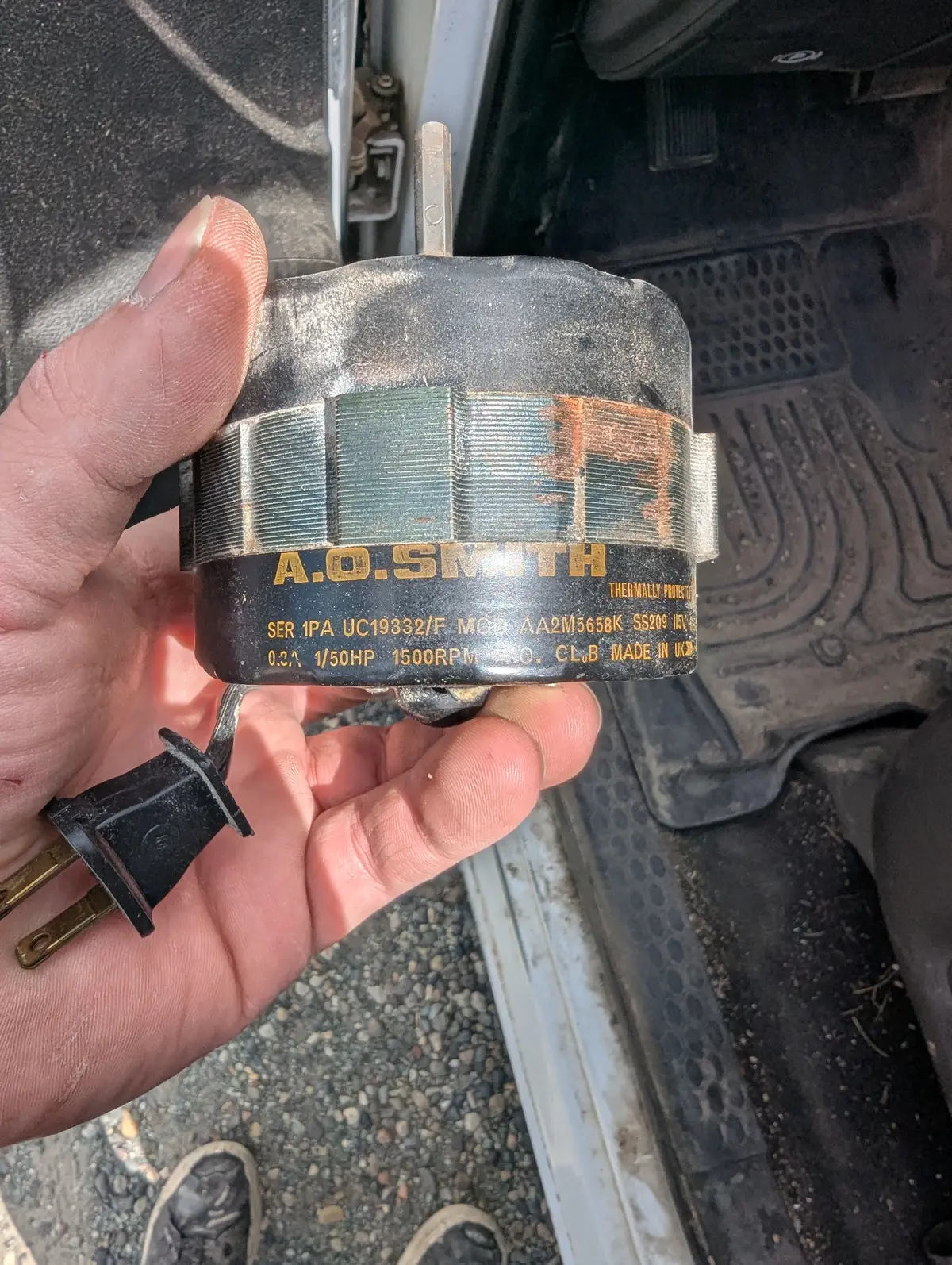
When a bathroom fan dies, the internet's answer is easy: fans are cheap, just replace the whole thing. And if you only look at the price tags, that's true — in this case, a brand-new fan cost less than the replacement motor for the old one.
The repair was still the cheaper job. Here's why.
What "just replace it" actually involves
The fan you see is a grille; the real fan is a metal housing nailed to the framing above your ceiling, connected to a duct that runs to the outside. Swapping the whole unit means getting the old housing out of the ceiling (they don't come willingly — they're nailed in and sealed to the duct) and fitting a new one that is almost never the same size as the old hole. That's how "replace the fan" can become drywall repair and duct adapting.
What the repair involved
This fan's motor unplugs like an appliance: unclip the old one, clip in the new one, plug it in. Ten minutes, ceiling untouched.
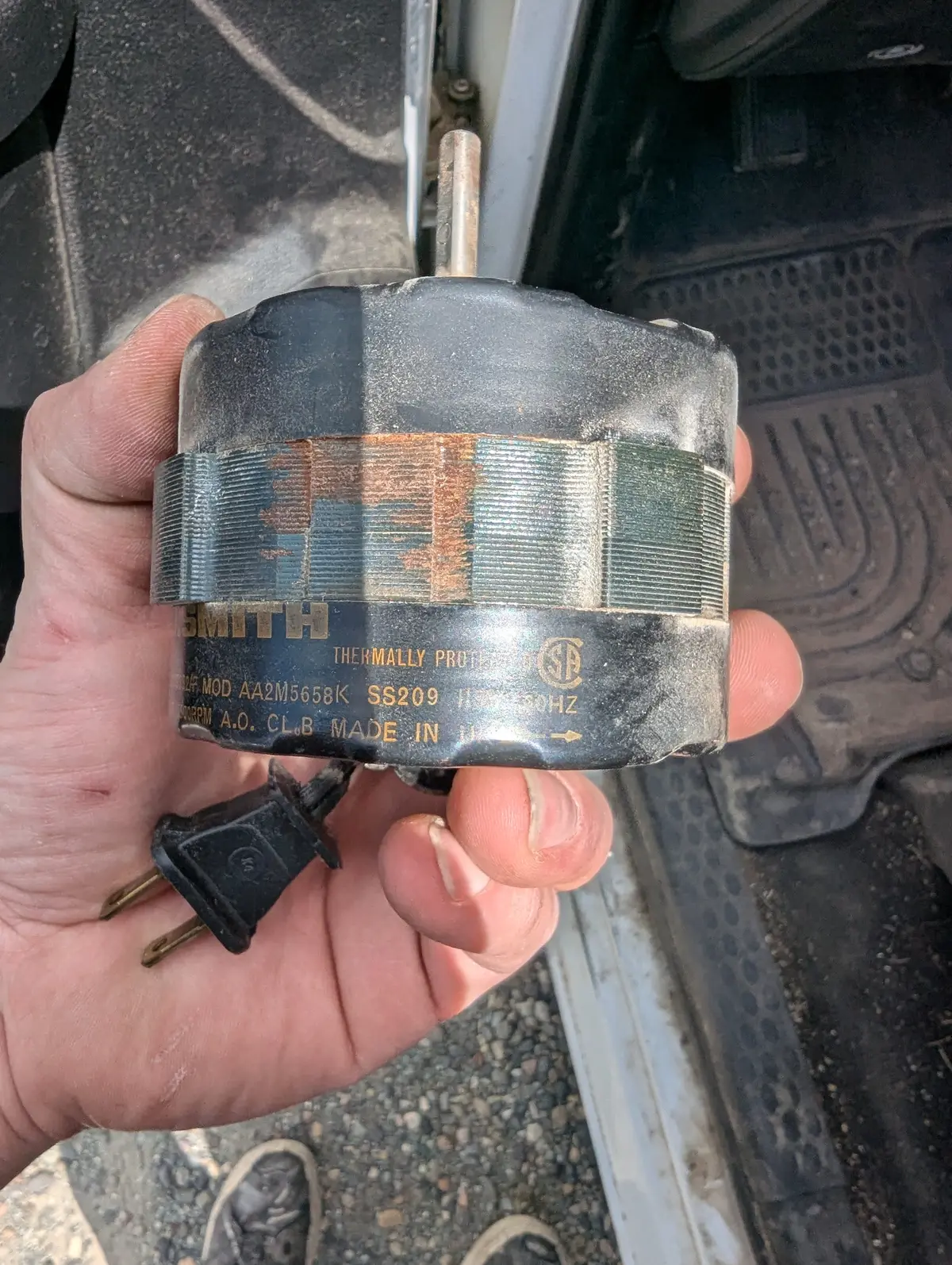
So even though the motor itself cost more than a whole new fan, the total bill — parts plus time — came in lower, and there was no patched ceiling to look at afterward.
When replacing is worth every penny
There's one upgrade that changes the math completely: noise. If your fan is so loud you avoid running it, it isn't doing its real job — controlling moisture. For those jobs I install the Panasonic WhisperFit Remodel almost exclusively: it's designed to slip into the existing ceiling opening without surgery, and it's so quiet people leave it running. Fan swaps start at $500; brand-new installs (new spot on the ceiling, new duct to outside) start around $800.
The upgrade for households with kids
A fan only protects your bathroom if someone actually turns it on — and there's nothing more annoying than yelling down the hall to tell your kid to turn the fan on. A humidistat switch ends that argument for good: it senses the humidity spike from a shower, runs the fan automatically, and shuts it off once the room is dry. Nobody has to remember anything, and nobody has to be reminded. Long showers behind a closed door with the fan off is exactly how ceilings end up peeling and growing mould.
The question to ask
When a tradesperson quotes you repair vs. replace, ask for the whole-job numbers on both, not the parts prices. Sometimes replacement genuinely wins — a rusted housing, a failing duct connection, or a fan too loud to live with changes the math. What matters is that the comparison is honest about the labor on each side.
Want the technical version? Read the full case study at MDN Electric.
The complete case study — test readings, code references, and exactly how this was diagnosed — is on the MDN Electric site.
Read the full case study Book an electricianQuick answers
Is it worth repairing a bathroom fan or should I replace it?
Compare the whole job, not the parts: a motor swap leaves the ceiling untouched, while a full fan replacement often means drywall, duct adaptation, and paint. If the housing and duct are sound, the repair frequently wins even when the motor costs more than a new fan.
Why does a replacement fan motor cost more than a whole new fan?
Complete builder-grade fans are mass-produced loss leaders; individual OEM motors are low-volume parts. The motor’s price tag looks worse, but it buys a job with far less labor attached.
How long do bathroom fan motors last?
Typically 10–15 years depending on use and how much moisture they move. A fan that runs long showers daily in a cold climate works harder than the same fan in a powder room.
When is full fan replacement clearly the right call?
Rusted or damaged housing, a failing duct connection, a discontinued fan with unobtainable parts, a fan too loud to actually use, or any time the ceiling is already open during a renovation. Then the labor penalty disappears and the new unit wins.
How much does replacing a bathroom fan cost in Prince George?
With MDN Electric, fan swaps start at $500 for a basic changeout of an existing fan, and new installs — a new location with new ducting — start around $800. For quiet retrofits, the go-to unit is the Panasonic WhisperFit Remodel (FV-0811RF2).
More home electrical guides
- Our Hot Tub Breaker Kept Tripping — and the Problem Was the Breaker
- One Dead Outlet, No Tripped Breaker — and a Fire Hazard Hiding Behind the Drywall
- Your Breaker Keeps Tripping? Here's What It Was Warning Us About
- The Baseboard Heater Myth: Why 'More Efficient' New Heaters Won't Cut Your Hydro Bill
- We Turned Off the Breaker — and the Lights Stayed On