Our Hot Tub Breaker Kept Tripping — and the Problem Was the Breaker
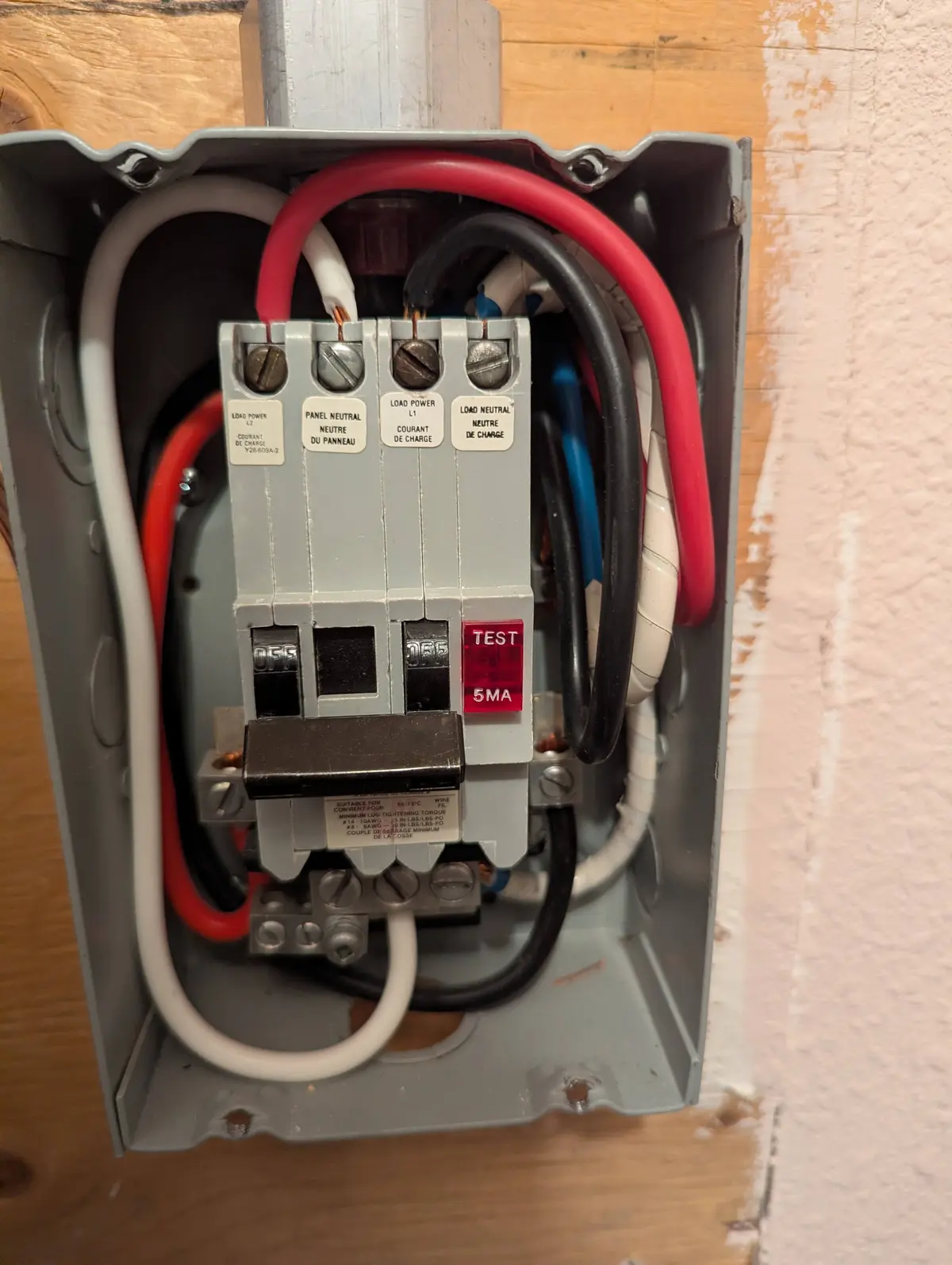
A hot tub that keeps shutting itself off is one of the more annoying problems a homeowner can have — especially in winter, when a tripped breaker can mean a frozen tub if nobody notices. This one was a newer Arctic Spas tub whose safety breaker kept tripping at random.
Why you can't just swap the breaker and hope
The breaker on a hot tub isn't a regular breaker — it's a GFCI, a device that measures leaking electricity down to five thousandths of an amp. That's the level that protects a person sitting in the water. So when it trips, the professional assumption is that it's telling the truth: somewhere, electricity is leaking where it shouldn't.
Replacing it without checking would be like taping over a smoke alarm because it keeps going off.
Testing everything the honest way
The diagnosis worked through every component that touches water or weather: the heater, the pumps, every connection. The key test is called meggering — it stresses the wiring's insulation at much higher voltage than normal operation, which exposes weak insulation that ordinary meters can't detect.
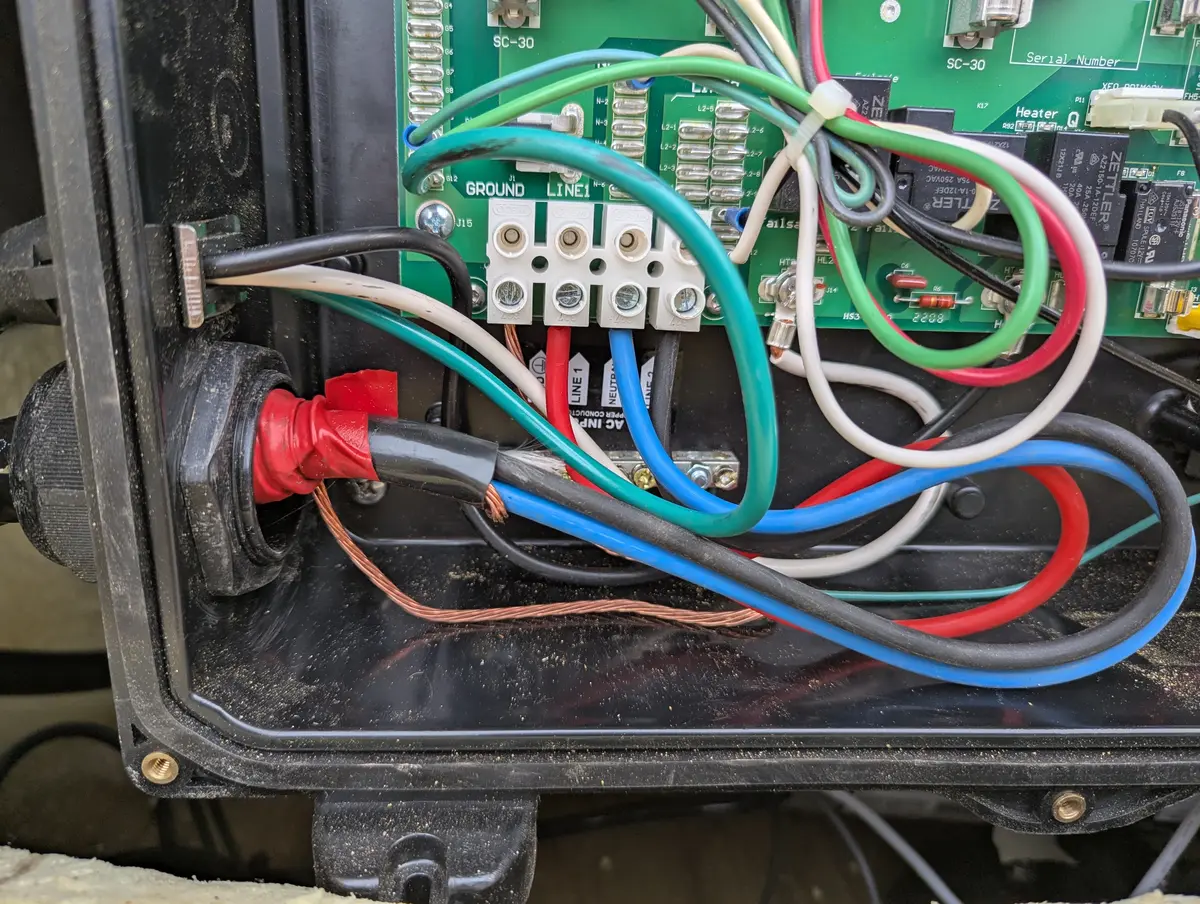
Everything passed. The tub was genuinely clean — no leaks, no failing parts, no moisture.
The answer nobody starts with
That left exactly one suspect: the breaker itself. GFCIs are small measuring instruments, and their electronics can fail in a way that makes them trip for no reason. With everything else ruled out, the breaker was replaced — and the problem was gone for good. No callbacks since.
The order matters: the breaker was the last thing replaced, not the first. If someone offers to fix your tripping hot tub by just putting in a bigger or newer breaker without testing anything, that's a shortcut with your safety.
Curious about the technical side? Read the full case study at MDN Electric.
The complete case study — test readings, code references, and exactly how this was diagnosed — is on the MDN Electric site.
Read the full case study Book an electricianQuick answers
Why does my hot tub GFCI keep tripping?
Usually for a real reason: a heater element with failing insulation, a pump leaking current, or moisture in a connection. Occasionally the GFCI itself has failed — but that diagnosis is only safe to make after everything else has been tested and ruled out.
Is it safe to reset a tripping hot tub breaker?
Resetting once is fine. If it trips repeatedly, stop resetting and get it diagnosed — a spa GFCI trips at the tiny current level that protects a person in the water, and repeated trips can mean electricity is leaking somewhere it shouldn’t.
What is a megger test?
An insulation resistance test that puts controlled high voltage across wiring and components to expose weakened insulation an ordinary meter can’t see. It’s the definitive way to prove a spa circuit is clean.
Can a GFCI breaker itself go bad?
Yes — a GFCI is a measuring instrument, and its electronics can drift or fail, causing nuisance trips with no real fault. Replacing it is the correct fix only once testing has proven the rest of the system clean.
More home electrical guides
- The $100 Part That Beat the $60 Fan: Repair Math Your Contractor Should Show You
- One Dead Outlet, No Tripped Breaker — and a Fire Hazard Hiding Behind the Drywall
- Your Breaker Keeps Tripping? Here's What It Was Warning Us About
- The Baseboard Heater Myth: Why 'More Efficient' New Heaters Won't Cut Your Hydro Bill
- We Turned Off the Breaker — and the Lights Stayed On